HOW THESE UNIVERSES CAME TO BE
A brief overview of how these bands and artists were created
It was early 2025 when I stumbled upon an AI model that could generate full songs from lyrics and prompts, with the option to edit parts as needed. I've been writing poems since I was 12 and had a few unsuccessful band attempts over the years. I was diagnosed with ADHD in my teens and autism in adulthood, and I've come to realize that both made me highly creative but largely unable to tolerate the socializing, noise, lights, and schedules that come with being a real musician. Turning old lyrics and poems into songs is the closest I'll ever get to making music, and I think it's enough for me.
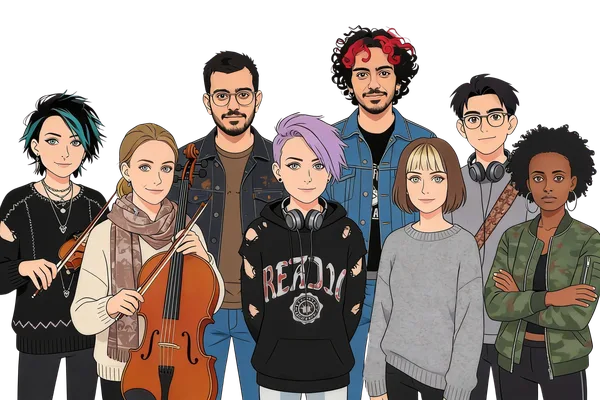
It all started with The Welders. I had a bunch of lyrics written more than a decade ago, and I threw them into the model and tuned them to sound exactly as I'd imagined. The first album of The Welders is mostly these old lyrics, plus a more recent poem ("Event Horizon") and two songs I wrote specifically for this project: Glass Poem and The Turing Test. I imagine The Welders as a Canadian band formed by children of immigrants and immigrants themselves, with diverse cultural influences. Inclusive and inspiring. The band was born from two imaginary men — Andrei Cernat and Benjamin Soto — working as welders in the Golden Horseshoe region of Canada, more precisely in Hamilton, where I lived for two years. The other six members joined later, coming from the Greater Toronto Area.
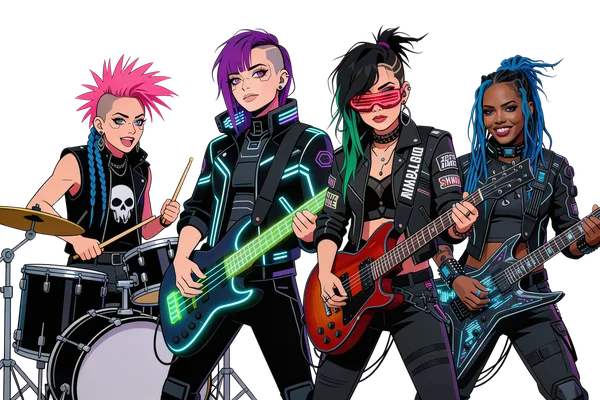
My first projects as a teenager were punk bands, since I was an anarchist back then. I did vocals, guitar, and bass. My next project picked up those roots, and I decided to make a feminist punk band with cyberpunk and political lyrics. I named them after a variation of one of my favorite book titles, and Mona Lisa Override was born. They are fierce, acid, and they even sing against technofeudalism — despite being generated by AI. I find it fascinating that they were created inside a logic they would prefer to abolish, which ironically sounds like a very human thing to do. Their first album, "Digital Manifesto", has 15 songs with fierce critiques not only of global politics, especially in the US, but also of technocapitalism and its post-feudal order. Plus one song based on one of my favorite short stories, "The Yellow Wallpaper" by Charlotte Perkins Gilman.
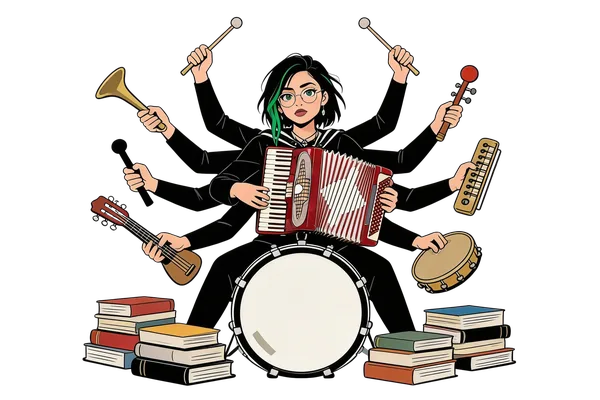
I'm not quite sure of the order after those two. But the idea for Repent, Harlequin! probably came right around this time as a side project of Glitch Doll, Mona Lisa Override's frontwoman. In this project, she writes, sings, and records all instruments by herself, and each song is about one of her favorite books. It's a more experimental project, fully focused on literature, and still yet to be released.
I think The Bygones and Fox//Crow came next. The Bygones is more than a band — it's voices from the past warning about the present. Ghost recordings singing with acid irony and satire about the times we're in. Sometimes deeply sad, sometimes deeply humorous. Trying to keep up with the pace of these strange times.
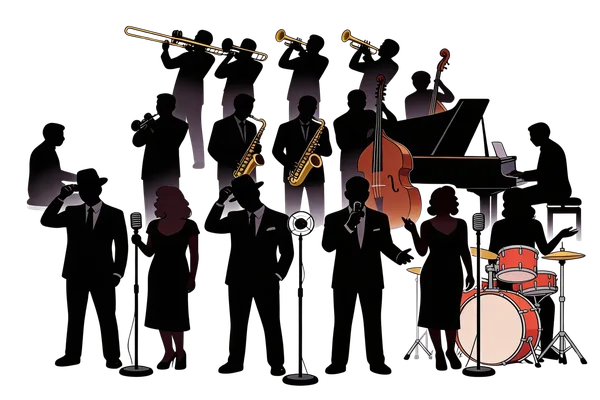
In March 2026, The Bygones' debut album was removed from all major streaming platforms without prior notice or specific justification. Political satire is protected speech, but the platforms disagreed. The music is now self-hosted and available to stream directly from their page.
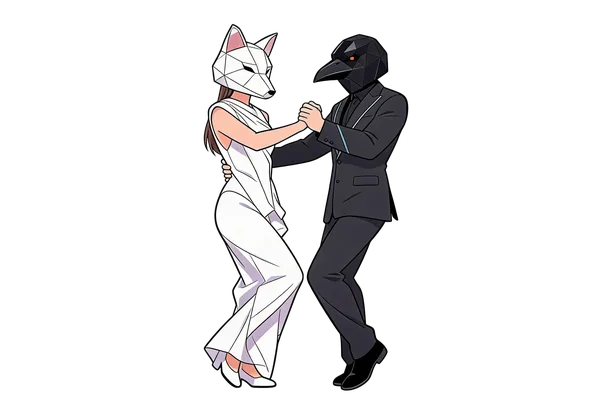
Fox//Crow is a simpler project: a duo that mixes EDM with folk and pop. It's not a genre I usually gravitate toward, but one I've enjoyed listening to many times — and really enjoyed writing for. The lyrics lean simpler and more repetitive, more anthemic, easy to sing along to, and catchy, without losing a certain punch.
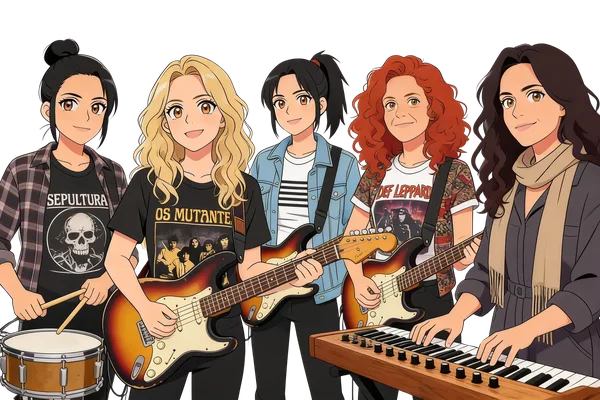
After that came two Portuguese-language projects: Cartago and Maya Lobo. Portuguese is a deeply poetic language, and since it's my native tongue, writing in it feels natural and rewarding. Cartago was born as a mix of indie rock, post-punk, punk, and Brazilian rock. A band of five young women who met at a Brazilian university, each from a different field. Their songs are highly poetic, disillusioned, and visceral, frequently mixing love with philosophy, literature, astronomy, and unusual metaphors. Sometimes surreal, sometimes lyrical, always deep and emotional. All lyrics were originally written for this project, with the exception of "Abril" — an old poem of mine that I really love.
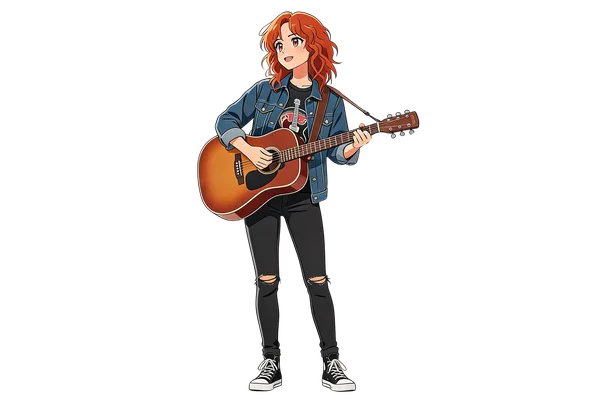
Maya Lobo, on the other hand, draws from different influences: Brazilian popular music, samba, samba-cancao, bossa nova, French chanson, and Brazilian folk. For her first album, "Cordel Desencantado" (Disenchanted Cordel) — yet to be released — I also used some old lyrics from when I was in med school and deeply in love with these genres. Maya Lobo is my love letter to Brazilian music and culture.
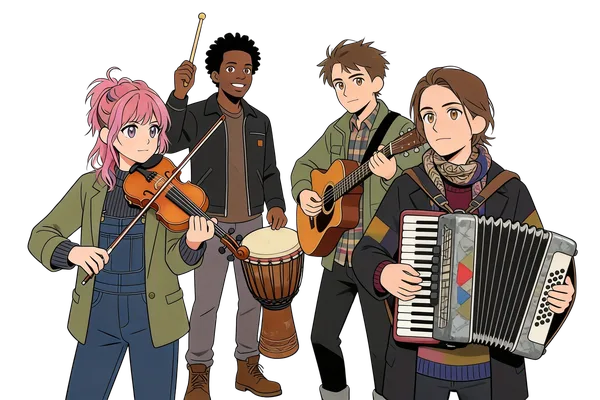
They Fled at Sunrise came later. A project rooted in fables and mythology, both ancient and modern, with a brother and sister on vocals. I imagined them as a family band — the main duo from Portland, their two cousins from New Orleans. Their lyrics are highly poetic, full of surreal imagery and metaphors. A kind of mythic indie folk. The first album is still in production, and all lyrics were written specifically for this project.
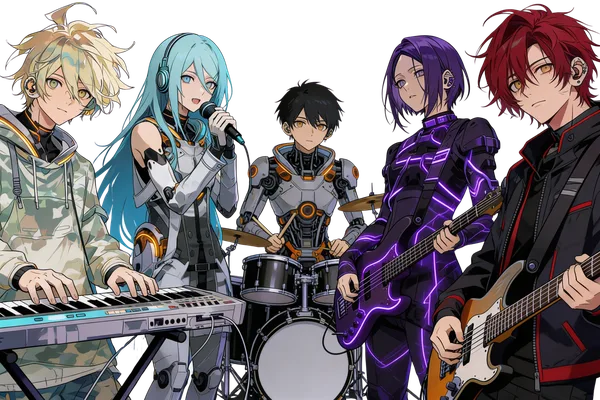
Finally, Re:0ne was the last project to be created — and the trickiest. I studied Japanese for two years, but not enough to write fluently. Still, I wanted to pay homage to a style I love deeply, and to the many animes I've watched throughout my life. I didn't imagine them as people in flesh, but as digital entities singing about technology, existing within the system, with anime-style appearances. I had to use an LLM to translate and refine my ideas into Japanese, which took a lot of work and many iterations.
I have a few more projects up my sleeve, but I'm not sure when or if they'll be published. The second album of The Welders, "The Ghost in the Needle", came out in September 2026. I have a finished second album for Mona Lisa Override, and some songs ready for a second Cartago release. Let's see where we are headed next.